
From FEED to Execution: The role of logistics modeling in Modular Capital Projects
Updated: Feb 3
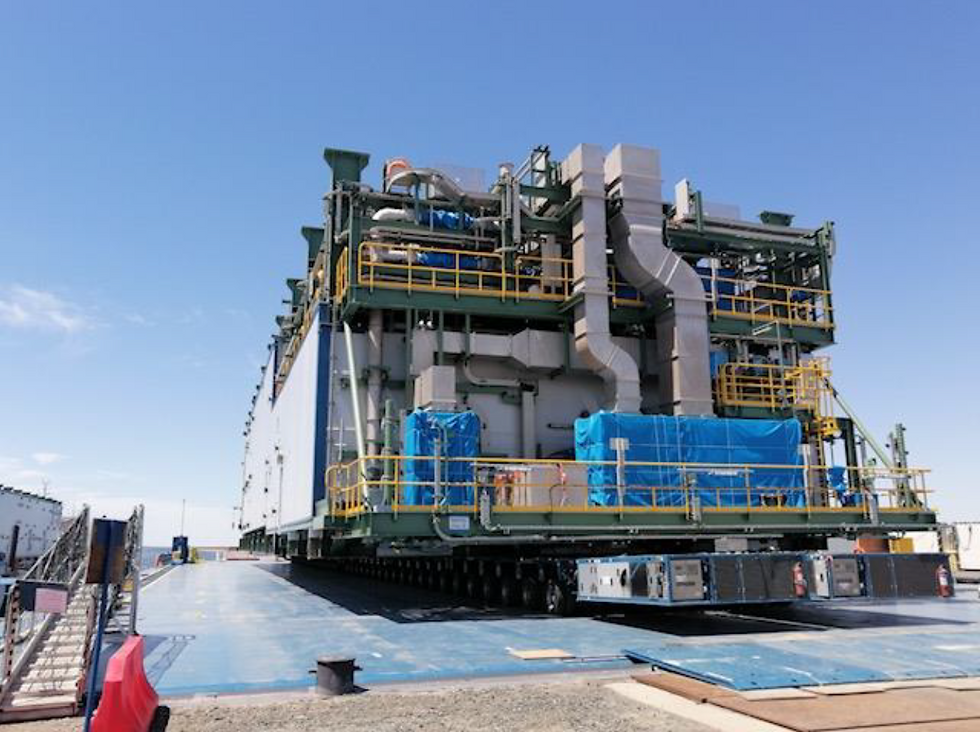
Logistics modeling is a critical capability in capital projects that involve modular fabrication, marine transport, and heavy-lift movements across oceans, rivers, and road networks. It serves as a central integrator, connecting procurement, planning, engineering, fabrication, construction, and operations with project leadership. By aligning these functions, logistics modeling delivers substantial value during both the Front-End Engineering Design (FEED) phase and project execution.
This article examines how logistics modeling enables better decision-making, reduces risk, and improves outcomes in modular capital projects.
The role of logistics modeling during FEED
During FEED, logistics modeling helps teams understand the complex interdependencies between design, fabrication, transport, and construction. It enables informed early-stage decisions by quantifying cost, schedule, and risk impacts before commitments are made.
Risk analysis and mitigation: Logistics modeling identifies potential bottlenecks and risks associated with transportation constraints, heavy-lift operations, weather exposure, and supply chain disruptions. For example, models can simulate weather-related delays in marine transport or road restrictions affecting oversized modules. This allows teams to define mitigation strategies early, such as alternative routes, buffer storage, or contingency vessels.
Data integration and scenario analysis: Effective logistics models integrate data from procurement plans, fabrication schedules, construction sequences, and transport availability to create realistic project scenarios. Teams can perform “what-if” analyses to compare alternative supply chain configurations or contracting strategies. For instance, evaluating the cost and schedule trade-offs between multiple smaller vessels versus a single heavy-lift vessel can directly inform contracting and commercial negotiations.
Determining asset requirements: Logistics modeling supports the definition of required assets, including cranes, transporters, vessels, and storage facilities. This ensures capital investments are aligned with actual project needs, avoiding both shortages and overinvestment in underutilized equipment.
Shaping contract requirements and bid evaluation: With early visibility into logistics constraints and cost drivers, project leadership can define clearer technical and commercial requirements for transport and heavy-lift contractors. This improves bid quality and enables more effective evaluation, ensuring proposed solutions are realistic, competitive, and aligned with project risk appetite.
Cost forecasting and capital efficiency: Early logistics modeling provides more accurate forecasts of logistics-related capital and operating costs. This reduces the likelihood of cost escalation during execution and improves overall budget confidence.
Supply chain network design: Modular projects typically rely on complex supply chains involving multiple fabrication yards, ports, staging areas, and transport modes. Logistics modeling enables the design of a supply chain network that balances cost, schedule reliability, and risk exposure.
Realistic project planning and KPI forecasting: By integrating logistics modeling with project scheduling tools during FEED, teams can develop execution plans that reflect real-world constraints rather than theoretical assumptions. The model also enables early forecasting of key performance indicators (KPIs), such as on-time delivery, transport utilization, and logistics cost variance.
Logistics modeling during project execution
As projects transition into execution, logistics modeling remains a vital operational tool, supporting day-to-day decision-making and rapid response to change.

Agile rescheduling and optimization: Logistics models enable rapid re-optimization when fabrication, transport, or site conditions change. For example, if module completion is delayed, the model can quickly rerun marine transport and heavy-lift schedules to minimize vessel idle time and downstream construction impacts.
Continuous cost optimization: By updating the model with actual progress and operational data, teams can identify cost-saving opportunities such as shipment consolidation, route adjustments, or revised sequencing of deliveries.
Early identification of schedule risks: Tracking logistics performance against the baseline schedule allows emerging risks to be flagged early. If a vessel arrival is delayed, the model can predict downstream impacts on construction activities, enabling proactive mitigation rather than reactive firefighting.
Execution tracking and plan updates: Integration between logistics models and project management systems ensures execution plans remain current. All stakeholders gain visibility into logistics status, improving coordination across disciplines and contractors.
KPI reporting and model recalibration: Real-time logistics data supports accurate reporting of KPIs such as transport cycle time, asset utilization, and cost performance. This data can be used to recalibrate the model, improving forecast accuracy and supporting better decisions as the project evolves.
Key components of an effective logistics model
A logistics model that delivers value throughout the project lifecycle typically includes the following capabilities:
Advanced scheduling: Ability to generate, test, and rerun schedules using both deterministic and simulation-based approaches to capture uncertainty.
Scenario comparison: Tools to evaluate alternative logistics strategies, supply chain designs, and contract structures.
Risk assessment: Quantification of risks related to weather, regulations, transport modes, and equipment availability.
Progress and actuals tracking: Integration with real-time data sources to monitor execution performance.
Visualization: Clear graphical representations of schedules, progress, and risk exposure to support communication and executive decision-making.

Practical examples of logistics modeling benefits
A large offshore platform project used logistics modeling during FEED to compare marine transport options. The model demonstrated that splitting modules across two vessels reduced overall schedule risk, despite slightly higher transport costs. This insight influenced contracting strategy and avoided costly delays.
A major oilfield extension applied logistics modeling during both FEED and execution to support port design, evaluate marine transport bids, guide investment decisions for barges and transshipment bases, and schedule marine and heavy-lift operations. The project was delivered on time and within budget.
During execution of a refinery expansion, real-time logistics modeling identified delays caused by port congestion. The team adjusted road transport schedules and storage plans, preventing cascading impacts on construction.
A modular fabrication project optimized its supply chain by modeling alternative fabrication yard locations and transport routes. The selected configuration reduced total logistics costs by 12 percent and improved schedule reliability.
Final thoughts on logistics modeling in modular capital projects
Logistics modeling is a powerful enabler that connects project functions and supports disciplined decision-making during both FEED and execution. By reducing risk, improving cost control, and creating realistic, constraint-based schedules, it addresses the inherent complexity of modular fabrication, marine transport, and heavy-lift operations.
Project directors, logistics managers, and planners who invest in robust logistics modeling capabilities gain clearer visibility into risks and opportunities, leading to smoother execution and stronger project outcomes.
Curious how logistics modeling can support your capital project? Contact us to find out.


Comments